
POST 2: MAKE THE SALES REP LOOK GOOD
The Most Important Relationship in the Vendor Ecosystem Isn't With the Partner Program. It's With the Person Who Has a Quota.
Forget the partner portal for a moment.
Forget the tier requirements, the certification paths, the partner advisory councils, and the co-marketing funds. All of that infrastructure exists for a reason — but none of it is where co-sell preference is actually built.
Co-sell preference is built in the moment a quota-carrying sales rep decides who they're going to call when a deal gets complicated. And that decision is almost never driven by partner program standing. It's driven by one thing: who made them look good last time.
This is the dynamic most agencies never fully internalize — and it's the one that explains almost everything about why co-sell opportunities are distributed so unevenly across partner ecosystems.
How Sales Reps Actually Think About Partners
A vendor sales rep's world is simple in structure and brutal in execution. They have a number. They have a timeline. They have a manager watching their forecast and a competitor trying to take their deals.
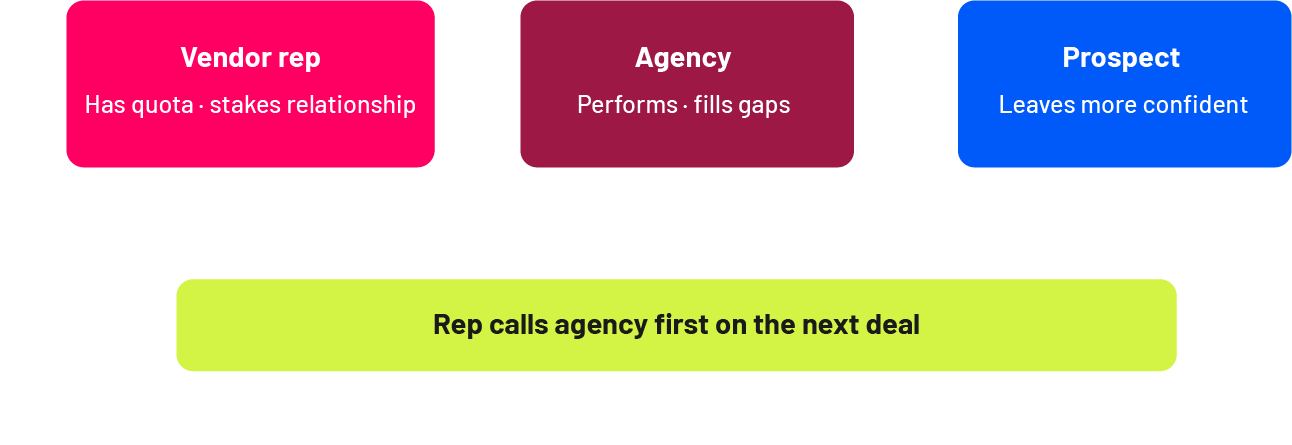
When they bring an agency partner into a deal, they are making a bet. They are telling their prospect — implicitly — that this agency is credible, capable, and aligned with what the vendor is trying to accomplish. They are staking a piece of their relationship with that prospect on the agency's performance.
That is not a small thing. And reps know it.
The agency that walks into that joint meeting and performs — that speaks confidently to business outcomes, handles objections without creating new problems, reinforces the platform narrative, and leaves the prospect more confident than before — has just done something valuable for that rep. Not abstractly valuable. Personally, professionally, immediately valuable.
The agency that stumbles, contradicts the rep's positioning, talks about its own capabilities instead of the client's problems, or creates confusion in the room has done the opposite. And that rep will not call them again.
It really is that simple. And that consequential.
What Making the Rep Look Good Actually Means
Show up prepared. Before any joint meeting, invest time understanding the rep's relationship with the prospect, where the deal stands, what the key objections are, and what a successful outcome looks like for the rep specifically.
Reinforce the platform narrative, don't complicate it. The agency's job in a joint meeting is to strengthen the vendor's story — not introduce competing frameworks that create doubt.
Handle objections in a way that helps the rep. When a prospect raises a concern, the agency that can address it credibly relieves pressure from the rep and moves the deal forward.
Make the prospect feel confident, not sold to. Authentic credibility builds the kind of prospect confidence that helps deals close.
Follow through completely and visibly. Whatever is committed to in a joint meeting needs to happen faster and better than the prospect expects.
The Practical Starting Point
Identify the three to five reps in your primary vendor's sales org where you have the most active relationship. Before the next joint meeting with any of those reps, do the preparation work explicitly. Call the rep beforehand. Ask what they need from you in the room.
After the meeting, debrief with the rep. Ask what worked, what didn't, and what they'd want done differently next time. This conversation is rare in agency-vendor relationships and remembered when it happens.
Do that reliably, and the referrals take care of themselves.
Want more from The Wolf Tank? Click here to be notified when new posts are published.